
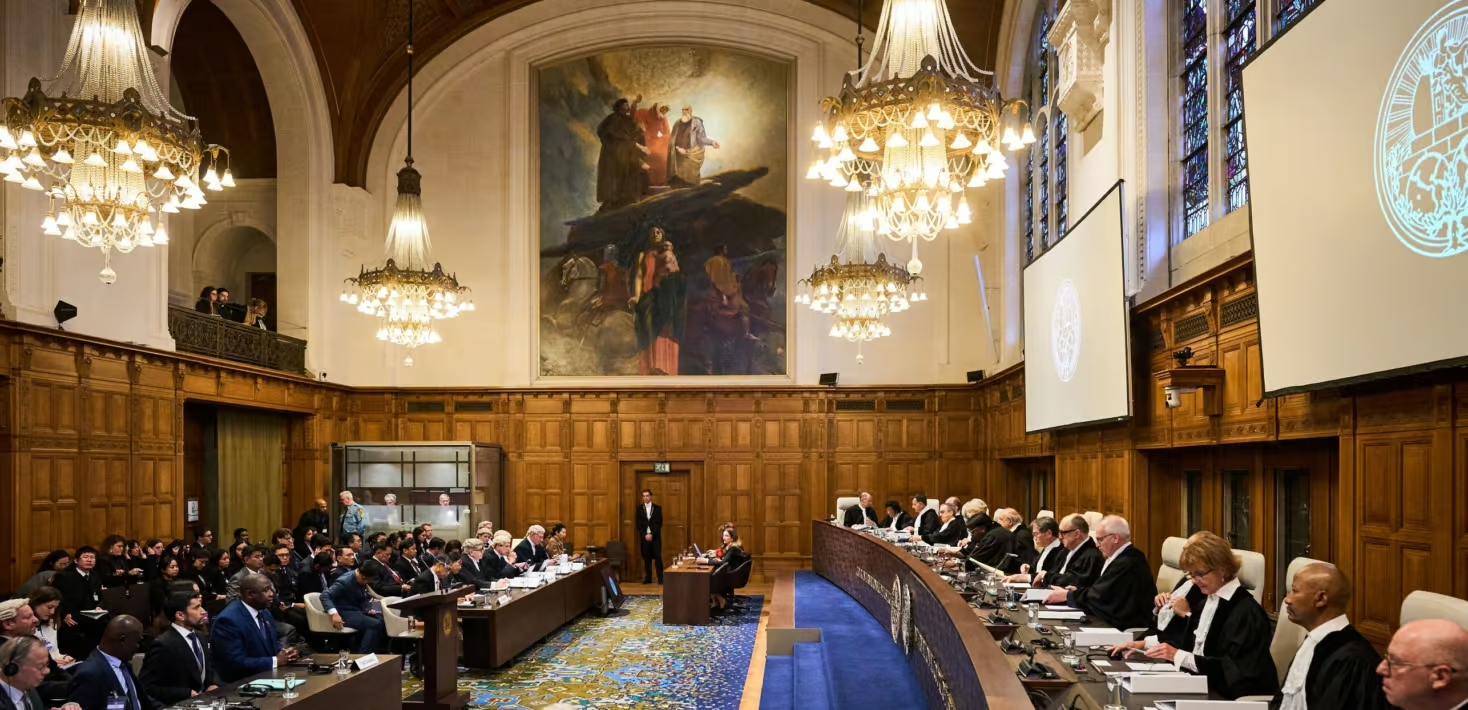
Responding to the ruling by the International Court of Justice (ICJ), the United Nations’ top court, that Myanmar authorities committed the crime of genocide in their clearance operations against Rohingya people in 2017, Amnesty International’s Secretary General Agnes Callamard said:
“Genocide. This is the unequivocal finding of the ICJ. After years of denial, impunity and suppression of truth, this ruling is a historic and authoritative recognition of the atrocities committed against the Rohingya and a rare moment of justice for survivors, victims and their families.
“For decades, Myanmar governments and military authorities have denied the Rohingya citizenship and subjected them to an institutionalized system of segregation, discrimination and persecution that amounts to the crime against humanity of apartheid. They have confined Rohingya to refugee camps, burned their homes and villages, and committed widespread unlawful killings and sexual violence, including during the horrors of the military’s 2017 campaign.
“This final judgment by the ICJ to must serve as a wake-up call to the international community at a critical juncture in Myanmar’s history. The findings of independent investigators and international courts must not simply be ignored. This decision comes only because the government of The Gambia set the wheels of justice in motion, exemplifying how all states can and should respond to crimes that shock the conscience of humanity.
“The Court’s clarification that genocidal intent can coexist with other goals, including military aims, is especially significant for other cases pending at the ICJ, such as the case brought by South Africa against Israel for alleged genocide against Palestinians in Gaza.
“The man who oversaw a campaign of crimes against humanity and other crimes under international law against the Rohingya, the former head of the armed forces Senior General Min Aung Hlaing, is now Myanmar’s president following engineered elections. Governments should not welcome him on the international stage, especially as grave violations continue unchecked inside Myanmar. Instead they should stop any transfer of all weapons, security and surveillance equipment, and military and security assistance to Myanmar. The UN Security Council should impose a global arms embargo and refer the entire situation in Myanmar to the International Criminal Court.
“The Myanmar authorities must comply with the ICJ’s ruling immediately. All other states, including ASEAN Member States, must also act to uphold it by meeting their own obligations under the Genocide Convention and general international law and doing everything within their power to prevent and punish genocide. Failure to uphold this judgment would only embolden the Myanmar military’s defiance of international law and perpetuate the cycle of impunity.
“This should not be the end of the struggle for justice for the Rohingya. Survivors and victims are entitled to full and effective reparations for the harms they have suffered. They also need sustained international support, including humanitarian assistance, resettlement opportunities and strong political and financial backing for international accountability mechanisms.
“We hope this ruling marks the beginning of a long overdue process of accountability in Myanmar. All crimes under international law, past and present, including war crimes, apartheid and other crimes against humanity, must be effectively investigated and those suspected of responsibility brought to justice.”
Background
On November 19, the ICJ in The Hague ruled that Myanmar committed genocide against the Rohingya people in connection with the military’s 2017 operations in Rakhine State. The ruling followed proceedings instituted by The Gambia against Myanmar in 2019, accusing Myanmar of breaching its obligations under the 1948 Genocide Convention. In July 2022, the ICJ decided that it had jurisdiction.
The judgment is especially significant because it is the first time the ICJ has found a state responsible for committing genocide under the Genocide Convention. In its 2007 judgment in the case of Bosnia and Herzegovina against then Serbia and Montenegro, the ICJ found that the killings in Srebrenica in 1995 constituted genocide, but did not find the state of Serbia responsible for committing that genocide. The Court instead found that Serbia had violated its obligations under the Genocide Convention by failing to prevent the genocide committed by a local armed groups under the leadership of General Ratko Mladić and by failing to punish those responsible, such as by not handing over for trial General Mladić to the International Criminal Tribunal for the former Yugoslavia (ICTY).
Following deadly attacks by Rohingya militants on police stations in August 2017, Myanmar security forces undertook a brutal campaign of ethnic cleansing against Rohingya Muslims in Myanmar’s Rakhine State. They unlawfully killed thousands of Rohingya, including young children; raped and committed other sexual violence against Rohingya women and girls; tortured Rohingya men and boys in detention sites; and burned down hundreds of Rohingya villages. From 2016, the violence pushed over 800,000 Rohingya — more than half the Rohingya population living in northern Rakhine State at the beginning of the crisis — into neighboring Bangladesh.
An estimated 1.3 million Rohingya refugees now live in Bangladesh, while many of their former homes and villages in Rakhine State have been destroyed. In recent years, the Arakan Army, a rebel group fighting the Myanmar military, has seized control of large parts of Rakhine State and has been accused, by Amnesty International and others, of human rights abuses against the Rohingya, driving more to seek shelter in Bangladesh.
International efforts to establish accountability for crimes against the Rohingya predate the ICJ judgment. The UN Independent International Fact-Finding Mission on Myanmar called for Senior General Min Aung Hlaing and other senior officials to be investigated and prosecuted for war crimes, crimes against humanity and genocide. Amnesty International’s own investigation in 2018 identified 13 senior officials – including Min Aung Hlaing – as warranting investigation and prosecution for crimes against humanity against the Rohingya.
The ICJ case concerns the international responsibility of Myanmar under the Genocide Convention of 1948 and is distinct from proceedings aimed at establishing the criminal responsibility of individuals. In 2024, the prosecutor at the International Criminal Court requested an arrest warrant for Min Aung Hlaing for his alleged responsibility for the crimes against humanity of deportation and persecution of the Rohingya committed in Myanmar and Bangladesh in 2017. No decision on that request has been made public to date. There are also several universal jurisdiction cases in various states around the world. In one separate case in Argentina under the concept of universal jurisdiction, a court in 2025 issued arrest warrants against dozens of people, including Min Aung Hlaing. However, to date the ICJ decision is the first ever international ruling finding Myanmar authorities responsible.
Contact: [email protected]